
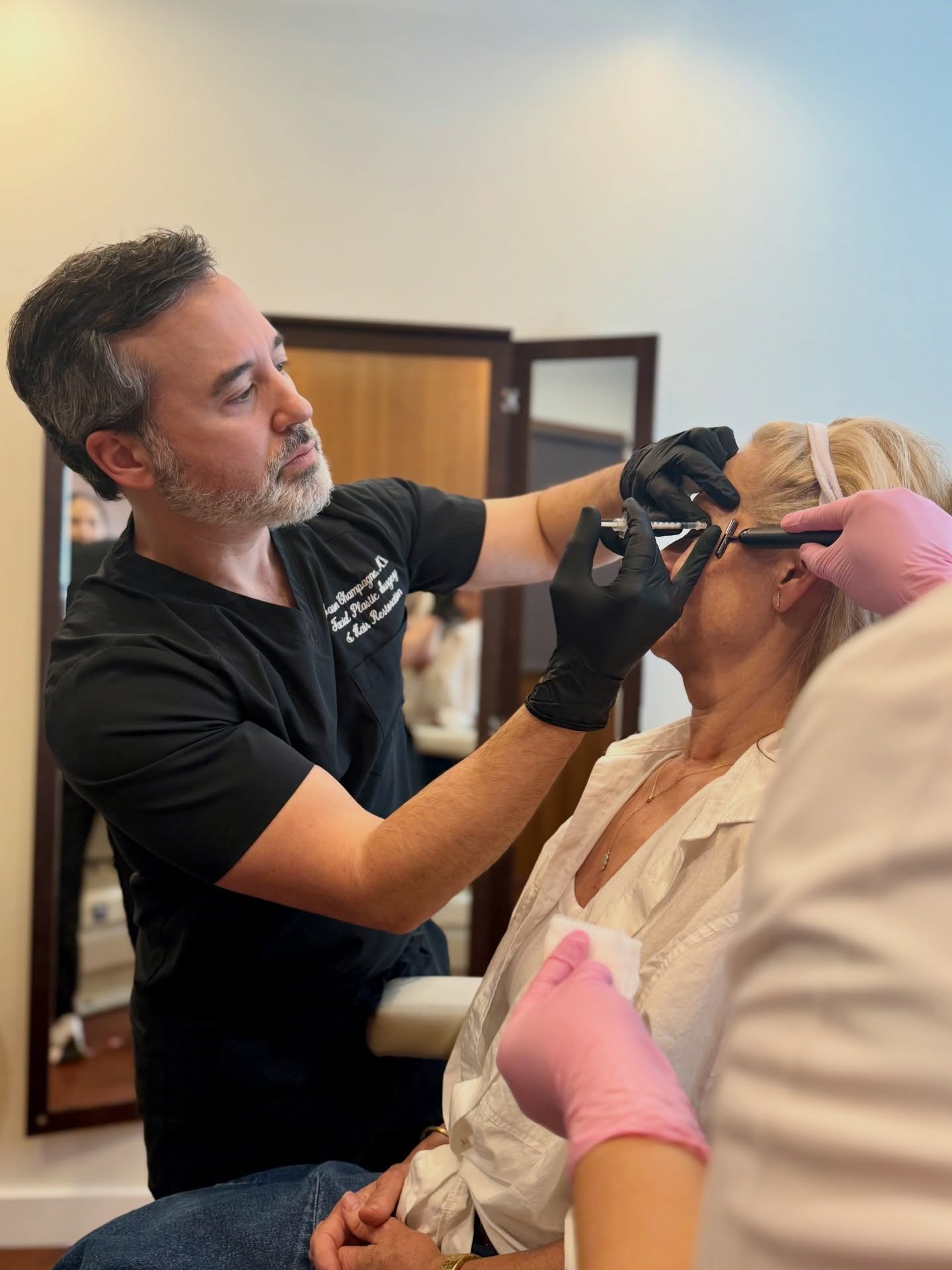
Many patients ask when they can safely receive Botox, Dysport, or dermal fillers after facial surgery. Although these treatments are nonsurgical, choosing the right time to resume them is important for protecting the healing process and achieving a balanced, natural-looking result.
There is no single waiting period that applies to every patient or procedure. The appropriate timing for Botox after surgery depends on the operation performed, the planned injection area, the amount of swelling or bruising present, medications being taken, and how the individual patient is healing.
Can You Get Botox After Surgery?
Botox or Dysport may be appropriate after surgery, but treatment should only resume after clearance from your surgeon. The fact that Botox is minimally invasive does not mean it should automatically be performed during the early stages of surgical recovery. Your surgeon may consider:- The location of your surgical incisions
- Whether the injection area overlaps the surgical area
- The amount of swelling, bruising, or tenderness present
- Whether you are taking medications that could affect bruising or healing
- Whether your recovery has been uncomplicated
- How injections could influence the evaluation of your surgical result
How Soon Can You Have Botox After General Anesthesia?
General anesthesia alone does not establish a universal waiting period for Botox. The more important considerations are the type of surgery performed, the medications used during recovery, your overall condition, and whether your surgeon believes healing is progressing normally. Before scheduling Botox after general anesthesia, tell your injector:- What operation you underwent
- When the surgery was performed
- Whether you experienced any complications
- What prescription and nonprescription medications you are taking
- Whether swelling, bruising, numbness, or tenderness remains
- Whether your operating surgeon has cleared you for injectable treatment
Botox or Dysport After a Brow Lift
A brow lift directly affects the forehead and eyebrow region—the same general area commonly treated with Botox or Dysport. Brow-lift recovery can include forehead swelling, bruising around the eyes, temporary tightness, and healing incisions along or within the hairline. Because the surgical and injection areas overlap, Dr. Champagne may recommend waiting approximately three to four weeks before administering Botox or Dysport to the forehead. However, this is a general example and not an automatic clearance date. Some patients may need additional time based on their healing, the brow-lift technique performed, and the location of the intended injections. A postoperative examination allows Dr. Champagne to assess brow position, muscle activity, swelling, and incision healing before deciding whether treatment is appropriate. Waiting also gives the brow time to settle so that any remaining muscle movement can be evaluated accurately. Treating too early could make it more difficult to distinguish temporary postoperative changes from areas that may genuinely benefit from neuromodulator treatment.Botox After a Facelift or Neck Lift
Facelift surgery in Beverly Hills generally focuses on the cheeks, jawline, and lower face, while a neck lift addresses loose skin, tissue, and contour concerns beneath the chin and along the neck. Because a facelift or neck lift primarily treats the lower face and neck, upper-face Botox may sometimes follow a different timeline. However, separation from the surgical area does not automatically make early treatment appropriate. Dr. Champagne evaluates swelling, healing progress, medications, and the planned injection area before providing clearance. For more procedure-specific information, read Botox After a Facelift: When to Resume Treatment and What to Avoid. Injections placed closer to the cheeks, jawline, neck, or healing incisions may require a different timeline. Dr. Champagne will evaluate the exact treatment location and how it relates to the tissues addressed during surgery.When Can You Resume Fillers After Facial Surgery?
The timing of dermal fillers after surgery deserves separate consideration. Unlike Botox and Dysport, which temporarily reduce targeted muscle activity, fillers add volume and alter facial contours.Residual surgical swelling can temporarily change the appearance of the cheeks, jawline, lips, under-eye area, and surrounding tissues. If filler is administered before this swelling has sufficiently improved, it may be difficult to determine how much volume is actually needed or whether filler is necessary at all.
The recommended waiting period depends on:- The surgery performed
- The location where filler would be injected
- The type of filler being considered
- The amount of postoperative swelling present
- Whether the filler area overlaps surgically treated tissue
- The patient’s healing progress and aesthetic goals
Why Treatment Timing Varies by Patient
Two patients who undergo the same procedure may not be ready for injectable treatment at the same time. Recovery is influenced by the extent of surgery, individual healing patterns, skin and tissue characteristics, postoperative swelling, medications, and whether multiple procedures were performed together. The appropriate treatment plan may also depend on the purpose of the injections. Botox intended to soften forehead lines is different from treatment near the jawline or neck. Likewise, subtle lip filler presents different considerations from filler placed near recently repositioned cheek tissue. For these reasons, timelines should be viewed as general guidance rather than fixed rules. A personalized postoperative examination is the safest way to decide when—and whether—additional treatment is appropriate.Ask Your Surgeon Before Resuming Injections
Before scheduling Botox, Dysport, or fillers after surgery, ask your surgeon:- Has the surgical area healed enough for injectable treatment?
- Does the planned injection area overlap any healing tissue?
- Could remaining swelling affect the result?
- Should I wait until a future postoperative appointment?
- Are any of my medications relevant to injection timing?
- Would Botox or filler complement my surgical result?
- Should the operating surgeon perform or coordinate the treatment?


