
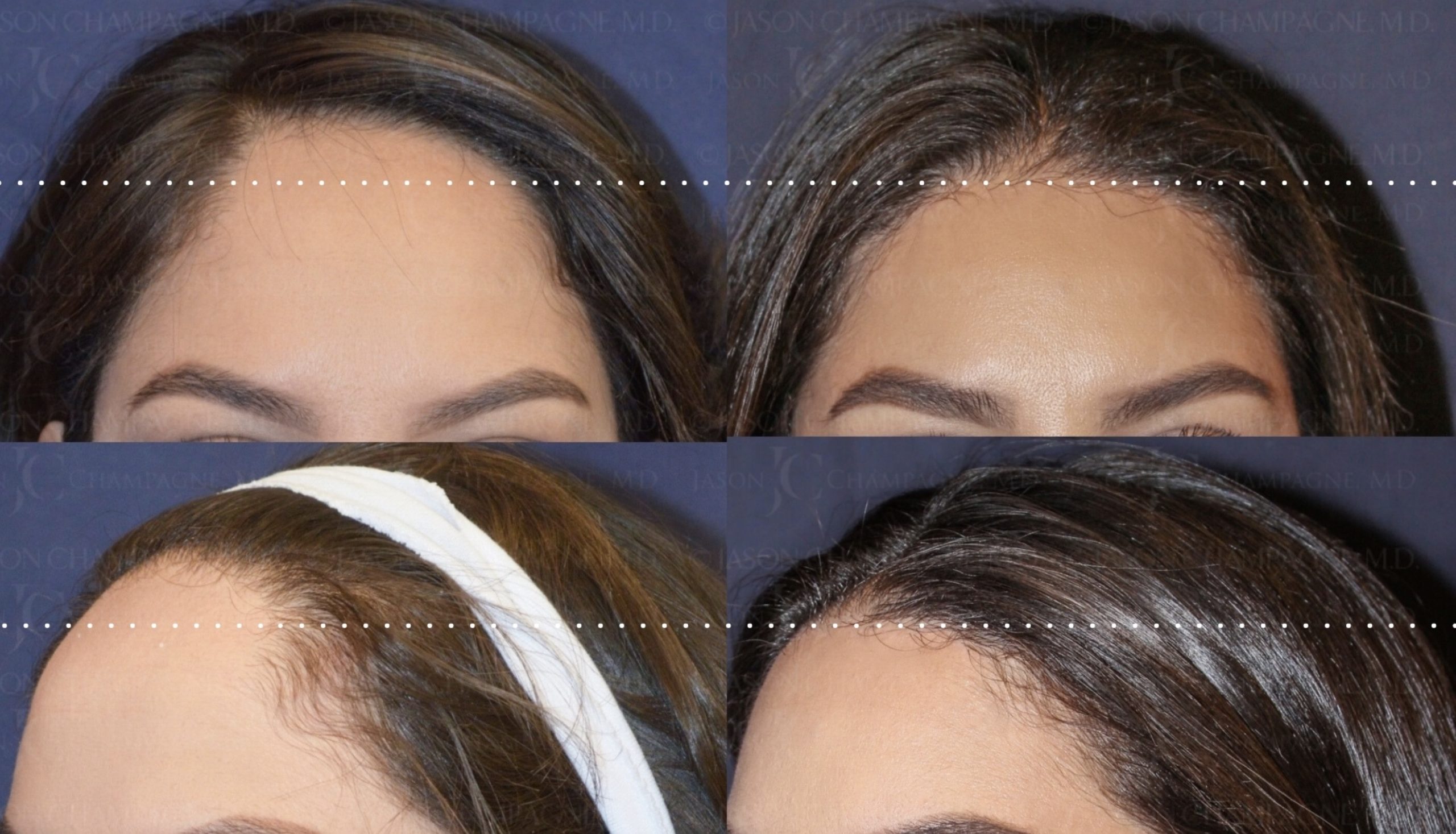
Hairline lowering, also known as forehead reduction surgery, is designed to reduce the height of the forehead by advancing the hairline into a more proportionate position.
For many patients, the concern is not just having a “high forehead,” but how it affects overall facial balance. The upper third of the face plays a significant role in how features are perceived, and when it appears elongated, it can subtly shift that balance.
This procedure offers a direct and immediate way to address that concern.
The First Questions Most Patients Ask
Before getting into the technical aspects, most patients want to understand three things:
Will it look natural
Will there be a visible scar
How much can the hairline actually be lowered
These are valid concerns, and the answers depend heavily on surgical technique, anatomy, and proper planning.
A natural result comes down to how the hairline is designed. The goal is not to create a straight or artificial edge, but to recreate the natural irregularities that exist in a typical hairline.
As for scarring, the incision is placed along the hairline in a way that allows hair to grow through and around it, helping to camouflage it over time.
The amount of lowering varies from patient to patient, but is largely determined by scalp flexibility and tissue mobility.
What Is Forehead Reduction Surgery
Forehead reduction surgery involves advancing the hair-bearing scalp forward to lower the position of the hairline.
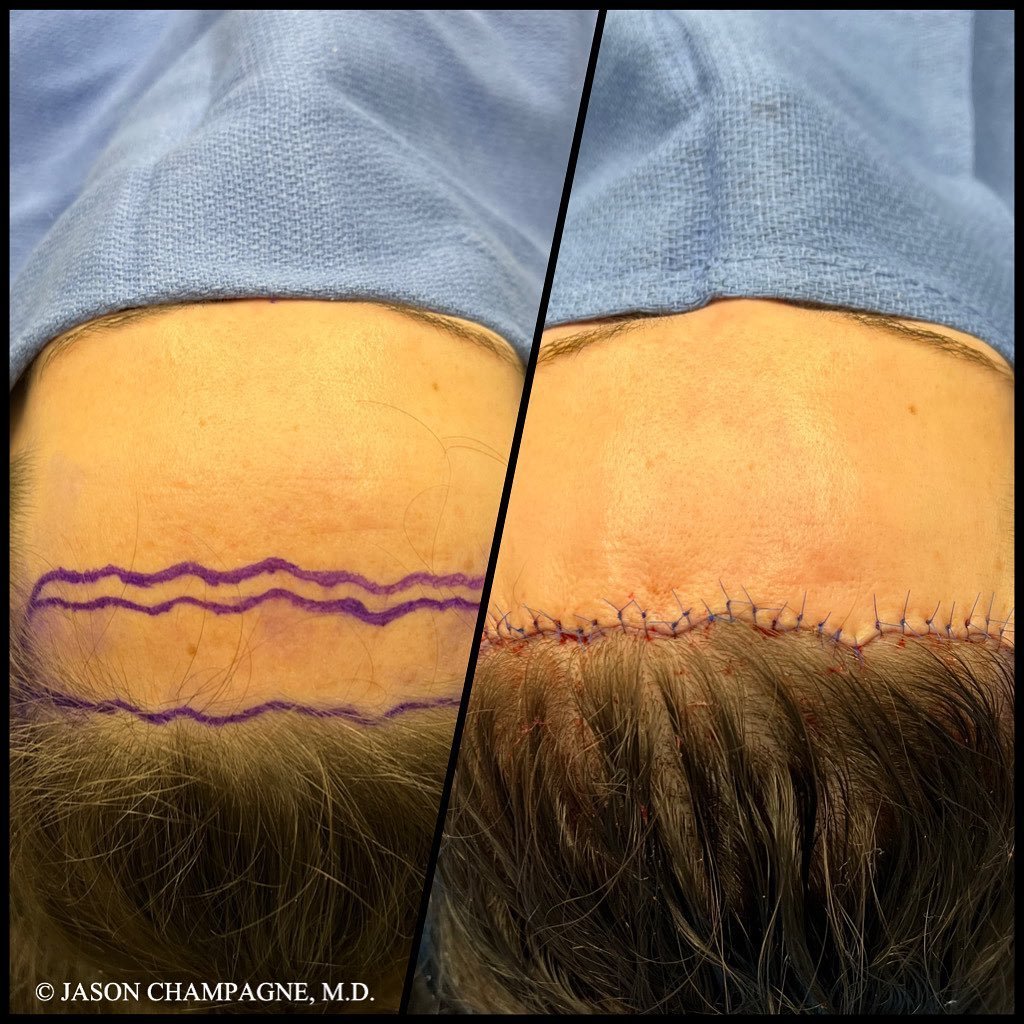
An incision is made along the natural hairline, the scalp is carefully mobilized, and then repositioned to a lower point. The skin of the forehead is adjusted accordingly, and the incision is closed with attention to detail so that it heals as discreetly as possible.
This is not about simply “moving the hairline down.” It is about creating a proportion that feels natural within the context of the entire face.
Why Facial Proportion Matters
A key concept in facial aesthetics is balance.
The face is often divided into thirds:
Upper third: hairline to brows
Middle third: brows to base of the nose
Lower third: base of the nose to chin
When the upper third is longer than the others, it can make the forehead appear more prominent, even if the rest of the features are well balanced.
Hairline lowering addresses this by bringing the upper third into better proportion with the rest of the face.
It is not about achieving a specific measurement. It is about restoring harmony.
Hairline Lowering vs Hair Transplantation
Patients often compare hairline lowering to hair transplantation, but they are fundamentally different approaches.
Hair transplantation works by harvesting individual follicles and placing them into the hairline area. The result develops gradually as the transplanted hairs grow over several months.
Hairline lowering surgery creates an immediate change by advancing the entire hairline in one procedure.
Each approach has its place.
Hairline lowering is typically best for patients who want a significant and immediate reduction in forehead height.
Hair transplantation may be better suited for refining the hairline, adding density, or for patients who are not candidates for surgical advancement.
In some cases, the two can be combined for optimal results.
Who Is a Candidate
Not every patient is a candidate for hairline lowering surgery.
Several factors are evaluated:
-Scalp laxity
There must be enough flexibility in the scalp to allow it to be advanced safely
-Hair density
Thicker density helps conceal the incision more effectively
-Hair loss stability
Patients with progressive hair loss may not be ideal candidates
-Hairline shape and goals
The design must be realistic and appropriate for the individual’s features
For patients who do not meet these criteria, alternative approaches may be recommended.
What to Expect During the Procedure
The procedure is performed with careful planning and precision.
The hairline is first designed to ensure it complements the patient’s facial structure.
The incision follows the natural irregular pattern of the hairline rather than a straight line, which is key to achieving a natural result.
Once the scalp is advanced, it is secured into its new position. The closure is performed in a way that supports proper healing and minimizes visibility.
Recovery and Healing
Recovery is generally straightforward, though it varies from patient to patient.
Swelling and tightness are common in the first few days.
Most patients return to normal, non-strenuous activities within about a week.
The incision continues to improve over time as it heals and as hair grows through and around the area.
Proper aftercare is essential to support healing and optimize the final result.
Will It Look Natural
This is one of the most important considerations.
A natural result depends on both the design of the hairline and the execution of the procedure.
The hairline should not appear overly straight or too low. It should reflect the natural variation seen in real hairlines and align with the patient’s overall features.
When done correctly, the change does not stand out as “surgery.” It simply brings the face into better balance.
Final Thoughts
Hairline lowering is not just about reducing the height of the forehead.
It is about restoring proportion, improving balance, and creating a result that feels consistent with the rest of the face.
For the right candidate, it can provide an immediate and meaningful improvement in how the face is framed.
As with any aesthetic procedure, the key is thoughtful planning, proper technique, and a clear understanding of the patient’s goals.
Who Is a Good Candidate for Hairline Lowering
Hairline lowering surgery is best suited for patients who have:
• A naturally high hairline
• Good scalp laxity (flexibility of the scalp)
• Thick hair density along the frontal hairline
• Stable hair loss patterns
Patients who are experiencing active or progressive hair loss may not be ideal candidates for hairline lowering alone. In those cases, hair transplantation may be a better option or used in combination with surgery.
Women often seek hairline lowering because they tend to maintain stable frontal hairlines over time. However, carefully selected male patients can also benefit when their hairline is stable.
Hairline Lowering vs Hair Transplant Surgery
A common question patients ask is how hairline lowering differs from hair transplantation.
Hair transplantation redistributes hair follicles from the back of the scalp to areas where density has been lost. This method builds a hairline gradually through follicular graft placement.
Hairline lowering surgery, on the other hand, physically repositions the entire hair-bearing scalp forward. The advantage is that results are immediate rather than gradual.
In some cases, the two procedures may be combined. Hairline lowering can reduce forehead height, while hair transplantation can refine the hairline shape. Some patients benefit from combining hairline lowering with hair transplantation to refine the final hairline shape.
Recovery and Healing
Recovery from hairline lowering surgery is generally straightforward. Swelling and mild tightness in the scalp are common during the first week. Most patients resume normal daily activities within a short period of time.
As the incision heals, hair grows through the area, helping the scar become increasingly difficult to detect.
The most noticeable improvement is the shift in facial balance. Because the forehead is shorter, the entire face appears more proportionate.
A Balanced Approach to Facial Aesthetics
Hairline lowering is not about dramatically altering a person’s appearance. Instead, the procedure focuses on restoring natural facial balance.
When facial proportions are harmonious, the result often feels subtle yet transformative.
Patients frequently report that their faces look more balanced in photographs and that hairstyles become easier to wear without trying to conceal the forehead.
Ultimately, the most successful aesthetic procedures are the ones that enhance natural features while preserving individual identity.
Hairline lowering surgery is one example of how small structural adjustments can significantly improve facial harmony.
Schedule Your Consultation
To see Dr. Champagne in consultation:
Office: 310-859-2379
E-mail: info@jasonchampagnemd.com


