
Understanding the facelift procedure step by step can make the decision to pursue facial rejuvenation feel far less overwhelming. Modern facelift surgery is not simply about tightening loose skin. It is a carefully planned operation that may reposition deeper facial tissues, improve the jawline and neck, remove appropriate amounts of excess skin, and restore more youthful facial contours.
No two facelifts are identical. The exact technique, incision pattern, treatment area, and recovery depend on the patient’s anatomy, degree of aging, skin quality, medical history, previous procedures, and personal goals.
This guide explains the general process—from the initial consultation through surgery, recovery, and long-term follow-up.
What Does a Modern Facelift Treat?
A facelift, medically known as a rhytidectomy, is designed primarily to address structural aging in the mid-to-lower face and, depending on the surgical plan, the neck.
Facelift surgery may improve:
-
Jowling along the jawline
-
Loss of lower-face definition
-
Descended facial tissues
-
Loose skin along the face and neck
-
Deepened folds caused partly by tissue descent
-
Reduced definition between the jaw and neck
-
Selected signs of midface aging
A facelift does not directly correct every sign of facial aging. Eyelid changes, brow descent, facial volume loss, sun damage, fine surface lines, and uneven skin texture may require separate or complementary treatments.
Step 1: Your Facelift Consultation

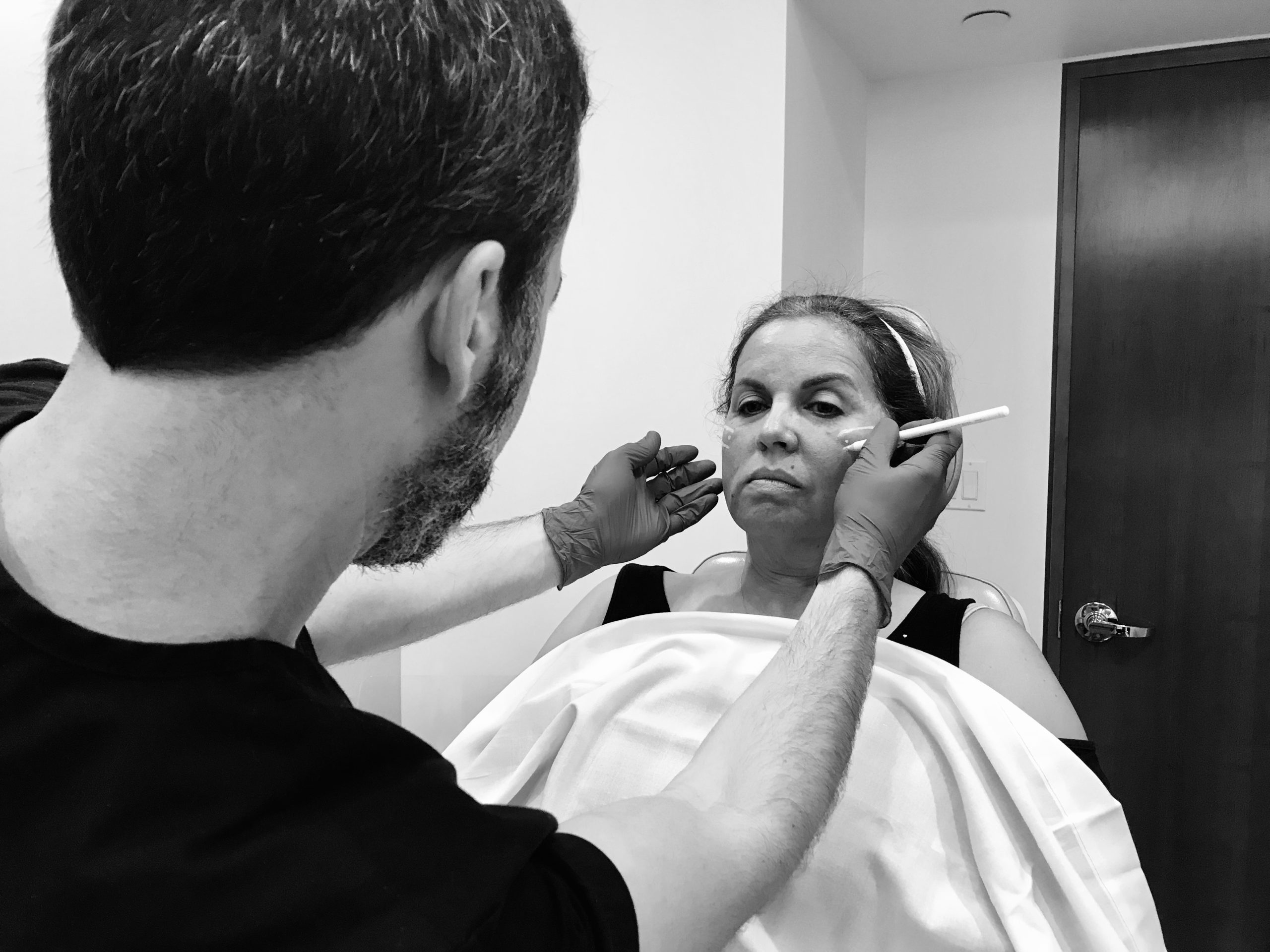
The process begins with an individualized consultation. Dr. Jason Champagne evaluates the face as a complete anatomical structure rather than concentrating on a single wrinkle or isolated area of loose skin.
During the consultation, Dr. Champagne may evaluate:
-
The degree and location of facial tissue descent
-
Jowling and jawline definition
-
Skin quality and elasticity
-
Neck skin and underlying neck structures
-
Facial volume and balance
-
Brow and eyelid aging
-
Hairline and sideburn position
-
Facial asymmetry
-
Previous facial procedures
-
General health and factors that may affect healing
This is also the time to discuss what you would like to improve and what you do not want to change. The goal should not be to make you look like a different person. It should be to develop a treatment plan that restores facial balance while preserving the characteristics that make your face recognizable.
Patients should disclose their complete medical history, previous surgeries, allergies, medications, supplements, nicotine use, and prior injectable or energy-based treatments.
You can also review Dr. Champagne’s facelift before-and-after photographs to see examples of different facial structures and treatment plans. Individual results will vary.
Step 2: Selecting the Appropriate Facelift Technique
“Facelift” is an umbrella term encompassing several surgical approaches. The appropriate technique depends on the anatomical structures requiring correction.
Options may include:
-
A limited or mini facelift
-
SMAS facelift
-
Deep plane facelift
-
Extended deep plane facelift
-
A facelift combined with neck surgery
-
A more comprehensive facial-rejuvenation plan
A mini facelift may be appropriate for early lower-face aging and mild jowling. A more comprehensive procedure may be necessary when there is advanced facial descent, substantial neck laxity, or aging across multiple regions.
An SMAS facelift addresses the superficial musculoaponeurotic system, a supportive tissue layer beneath the skin. A deep plane approach involves working beneath portions of the SMAS and releasing selected retaining structures to allow deeper tissues to be repositioned.
Patients considering this approach can learn more about deep plane facelift surgery in Beverly Hills, including candidacy, recovery, incision placement, and expected results.
Neither technique is automatically appropriate for every patient. The operation should be selected according to anatomy, not simply because a particular term is popular online.
For a more detailed explanation, read Deep Plane Facelift vs. SMAS Facelift and 8 Facelift Techniques Ranked: Which Procedure Creates the Most Natural Results?.
Step 3: Creating a Complete Facial-Rejuvenation Plan
Facial aging rarely occurs in only one area. A facelift can reposition descended facial tissues, but it does not automatically correct eyelid aging, brow position, volume loss, or skin texture.
Depending on the examination, a facelift may be combined with:
-
A neck lift for more extensive neck laxity or visible neck bands
-
Blepharoplasty for aging around the upper or lower eyelids
-
A brow lift for a descended brow
-
Facial fat transfer to restore volume in selected areas
-
CO2 laser skin resurfacing for selected concerns involving skin texture and sun damage
When multiple areas need treatment, Dr. Champagne may recommend a more comprehensive plan such as Champagne Full Facial Rejuvenation®.
Combining procedures is not appropriate for every patient. Additional treatments can affect the length of surgery, recovery, and potential risks, so every component should have a clear purpose.
Step 4: Preparing for Facelift Surgery
Once the surgical plan has been established, the practice provides individualized preoperative instructions.
Preparation may include:
-
Completing required medical testing or clearance
-
Reviewing current prescriptions and supplements
-
Following instructions concerning medications that may affect bleeding
-
Avoiding nicotine before and after surgery
-
Limiting alcohol as directed
-
Arranging transportation after surgery
-
Preparing for help during the initial recovery period
-
Filling necessary prescriptions
-
Preparing a comfortable recovery area at home
-
Planning adequate time away from work and social obligations
Never discontinue a prescription medication without instructions from the prescribing physician and surgical team.
Nicotine is particularly important to discuss because it can restrict circulation and interfere with wound healing. Patients should disclose cigarettes, vaping, nicotine gum, patches, and other nicotine-containing products.
Step 5: The Day of Surgery
On the day of surgery, the surgical team reviews the treatment plan, confirms the procedures being performed, and answers any remaining questions. Surgical markings may be placed while the patient is upright so the areas of tissue descent and planned correction can be evaluated accurately.
Facelift surgery may be performed using general anesthesia or another form of anesthesia selected according to the operation, the patient’s health, and the surgical team’s recommendations.
The length of the operation varies. A limited facelift performed alone will generally differ from a comprehensive facelift combined with neck surgery, eyelid surgery, fat transfer, or skin resurfacing.
Step 6: Placing the Facelift Incisions
Incision placement depends on the selected technique and the areas being treated.
Facelift incisions are commonly positioned within the hairline, around portions of the ear, and through natural creases where possible. If the neck requires additional treatment, an incision beneath the chin may sometimes be used.
Careful incision planning is important because it can help:
-
Preserve the natural hairline and sideburn
-
Avoid visible distortion around the ear
-
Provide access to the tissues requiring correction
-
Allow excess skin to be removed appropriately
-
Place scars in comparatively discreet locations
Incisions cannot be made completely invisible, and every patient forms scars differently. However, thoughtful placement and careful closure can help the incisions become less conspicuous as they mature.
Learn more about where facelift scars are located and how incision lines are concealed.
Step 7: Repositioning the Deeper Facial Tissues
This is one of the most important differences between modern structural facelift surgery and older skin-focused techniques.
Rather than depending entirely on surface-skin tension, the surgeon works with selected supportive tissues beneath the skin. Depending on the technique, these tissues may be elevated, repositioned, secured, or released where necessary.
Repositioning deeper tissues may help:
-
Restore lower-face support
-
Improve jowling
-
Refine the jawline
-
Reposition descended cheek tissue when appropriate
-
Reduce the need to place excessive tension on the surface skin
-
Create facial contours that appear refreshed rather than tightly pulled
The exact tissue plane and method of repositioning differ among SMAS, deep plane, and other facelift approaches. A more extensive dissection is not automatically better for every patient. The appropriate operation is the one that safely addresses the anatomical problem while supporting a balanced result.
Step 8: Addressing the Neck When Necessary
The face and neck should be evaluated together because treating one without considering the other can produce an unbalanced result.
Depending on the patient’s anatomy, neck treatment may involve:
-
Repositioning or tightening selected underlying neck structures
-
Addressing visible platysmal bands
-
Removing an appropriate amount of excess neck skin
-
Reducing localized fat beneath the chin
-
Improving the transition from the jawline into the neck
Some patients require only limited neck correction as part of their facelift. Others may need a more extensive neck lift to address loose skin, muscle laxity, or diminished neck definition.
Patients with good skin quality and isolated fullness beneath the chin may occasionally be candidates for neck liposuction, although liposuction alone cannot correct substantial loose skin or muscle laxity.
Step 9: Redraping the Skin and Closing the Incisions
After the deeper tissues have been repositioned, the skin is carefully redraped over the new facial contours. An appropriate amount of excess skin may then be removed.
The objective is not to stretch the skin as tightly as possible. Excessive surface tension can contribute to an unnatural appearance, widened scars, distorted ears, or changes in the hairline.
Instead, the technique aims to minimize unnecessary tension on the skin while allowing the deeper tissues to provide structural support. The incisions are then closed using the method selected by the surgeon.
Dressings may be placed to support the treated areas during the beginning of recovery.
Step 10: The First 24 to 72 Hours After Surgery
Patients must arrange for a responsible adult to take them home and assist during the early recovery period.
Swelling, bruising, tightness, fatigue, and temporary changes in sensation are expected after facelift surgery. Swelling commonly becomes more noticeable during the first few days before gradually improving.
Early instructions may include:
-
Keeping the head elevated
-
Taking prescribed medications as directed
-
Limiting unnecessary activity
-
Avoiding bending, straining, and heavy lifting
-
Caring for the incisions and dressings
-
Attending scheduled postoperative appointments
-
Contacting the practice if concerning symptoms develop
Early swelling does not represent the final result. The face may initially look uneven, unusually full, or tighter than expected while tissues are healing.
Step 11: The First Two Weeks of Recovery
The first one to two weeks are generally the most socially limiting portion of recovery. Bruising and swelling gradually improve, although every patient heals at a different rate.
Many patients feel comfortable returning to desk work or selected social activities after approximately 10 to 14 days. Someone with a public-facing occupation or an important event may wish to allow additional time.
During this stage:
-
Sutures or clips may be removed according to the surgical plan
-
Swelling and bruising should progressively improve
-
Temporary numbness or tightness may persist
-
Light walking may be encouraged
-
Strenuous exercise and heavy lifting remain restricted
-
Makeup may be permitted once the surgeon approves it
Patients undergoing several procedures together may require a different recovery timeline than someone undergoing a facelift alone.
For a more detailed breakdown, read the facelift recovery timeline week by week.
Step 12: Returning to Exercise and Normal Activities
Activity restrictions are gradually reduced as healing progresses. Patients should not use a generic online timeline as permission to resume exercise. Clearance should come from their surgeon.
Elevating the heart rate too early may increase swelling, bruising, or bleeding risk. More strenuous exercise, heavy lifting, and high-impact activities are commonly restricted for several weeks.
The return to normal activity depends on:
-
The extent of surgery
-
Whether procedures were combined
-
The patient’s health
-
Healing progress
-
The surgeon’s postoperative assessment
Step 13: Watching the Result Develop
Facelift results do not appear all at once. The facial contours gradually become more refined as swelling resolves and the tissues settle.
Patients may notice:
-
Substantial social improvement within the first few weeks
-
Continued reduction in swelling over several months
-
Progressive softening of incision lines
-
Gradual improvement in tightness or numbness
-
Increasingly natural integration of the facial contours
Subtle residual swelling can persist after a patient otherwise feels recovered. Scars may continue to mature for many months.
A facelift does not stop aging. It changes the patient’s facial starting point, after which the natural aging process continues. Skin quality, sun exposure, nicotine use, weight fluctuations, genetics, and skincare can all influence how the result ages.
Read How Long Do Facelift Results Last? for a more complete discussion of longevity.
What Are the Risks of Facelift Surgery?
All surgical procedures involve potential risks. Facelift risks can include:
-
Bleeding or hematoma
-
Infection
-
Seroma
-
Delayed wound healing
-
Skin loss
-
Temporary or persistent changes in sensation
-
Facial weakness or nerve injury
-
Hairline or sideburn changes
-
Asymmetry
-
Visible or unfavorable scarring
-
Contour irregularities
-
Anesthesia complications
-
Dissatisfaction with the result
-
The possible need for revision surgery
The presence and likelihood of individual risks depend on the patient’s health, surgical plan, and other factors. Dr. Champagne reviews the relevant risks and alternatives during the consultation and preoperative process.
How Can a Facelift Look Natural?
A natural-looking facelift begins with an accurate diagnosis. The surgeon must determine which tissues have descended, which areas have lost volume, how the neck relates to the face, and how much correction is appropriate.
Important considerations include:
-
Repositioning the appropriate deeper tissues
-
Avoiding unnecessary surface-skin tension
-
Respecting the hairline and ear anatomy
-
Preserving individual facial characteristics
-
Correcting related areas only when needed
-
Avoiding excessive or poorly balanced changes
-
Selecting a technique suited to the patient’s anatomy
The objective is not to erase every sign of age. It is to restore more youthful facial proportions without making the patient look unfamiliar or obviously operated upon.

Questions to Ask Before Your Facelift
Before moving forward, consider asking:
-
Which facelift technique do you recommend for me, and why?
-
Which areas will the procedure treat?
-
What will the procedure not correct?
-
Will my neck require separate treatment?
-
Where will my incisions be placed?
-
What type of anesthesia will be used?
-
Should any procedures be combined with my facelift?
-
What recovery should I realistically plan for?
-
When can I return to work, exercise, and social activities?
-
What risks are most relevant to my health and surgical plan?
-
How are postoperative concerns or complications handled?
-
Can I see results from patients with anatomy similar to mine?
Schedule a Facelift Consultation
A written guide can explain the general stages of facelift surgery, but it cannot determine which operation is appropriate for your face.
Dr. Champagne evaluates each patient’s facial structure, aging pattern, skin quality, neck, medical history, and goals before recommending a personalized approach.
To learn more about your options, schedule a private in-person or virtual consultation with Dr. Jason Champagne.


