
Hair loss in women is often misunderstood and rarely discussed with the same openness as hair loss in men. While male pattern baldness has long been normalized, many women quietly struggle with thinning hair, changes in density, or recession along the hairline without realizing that solutions may exist.
Female hair loss is more common than many people realize, and the causes can vary significantly from one person to another. Genetics, hormonal changes, styling habits, and tension from certain hairstyles can all influence the health and longevity of hair follicles. In some cases, long-term stress placed on the hair can permanently affect density in specific areas.
Understanding the underlying cause is the first step toward determining whether treatment, including hair restoration, may be appropriate.For patients exploring how to regrow hair, modern restoration techniques offer several surgical and non-surgical approaches depending on the pattern of hair loss.
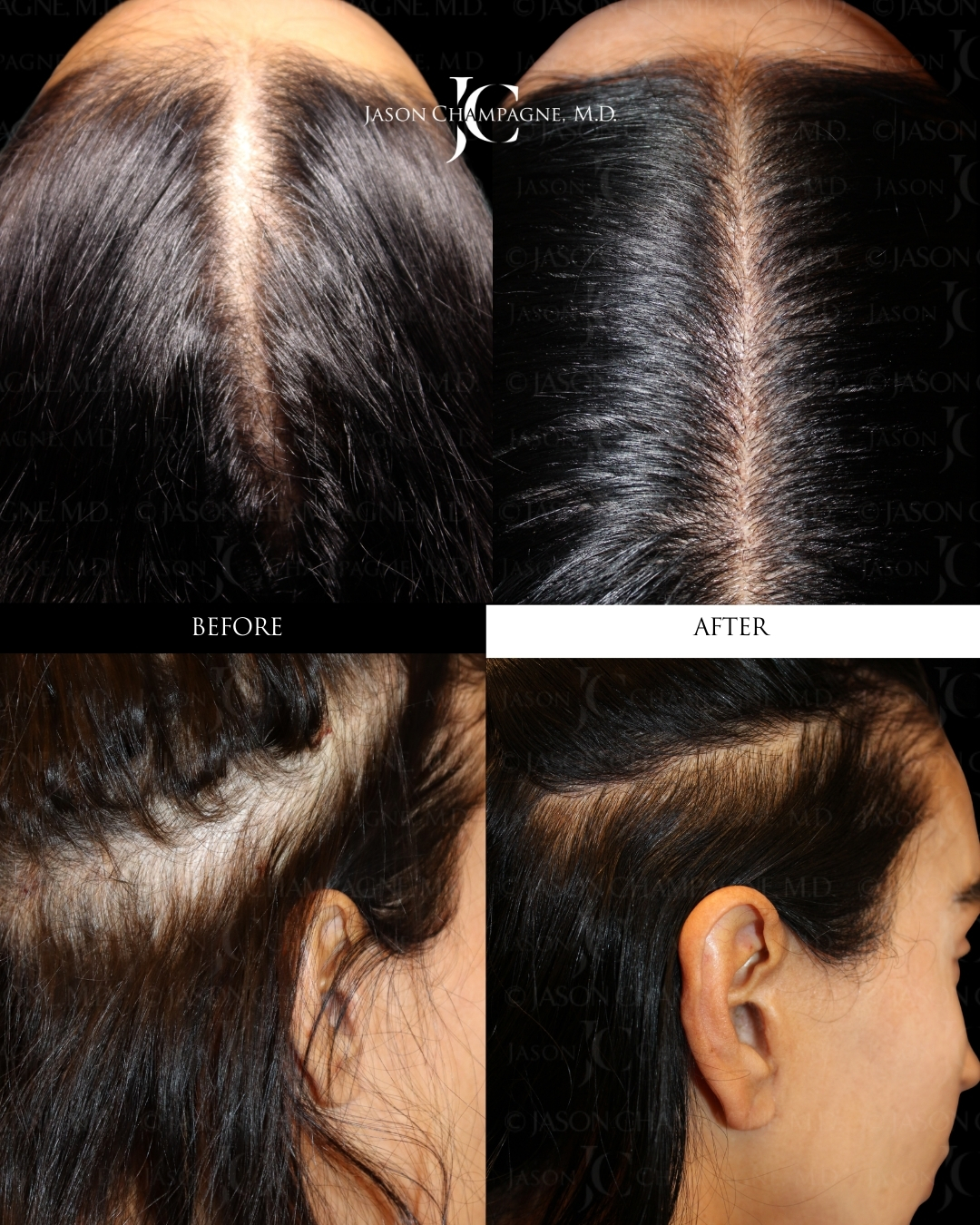
The Many Causes of Hair Loss in Women
Hair loss in women rarely presents in exactly the same way. Some patients experience diffuse thinning across the scalp, while others notice gradual changes along the temples or frontal hairline.
Genetics plays a role for many individuals. Female pattern hair loss can cause progressive thinning over time, particularly along the part line or crown of the scalp.
Hormonal changes can also influence hair density. Shifts related to pregnancy, menopause, thyroid function, or other hormonal fluctuations can impact the hair growth cycle and contribute to thinning. In some patients, broader facial changes such as facial volume loss after weight loss medications may also occur as the body responds to hormonal and metabolic shifts.
Another increasingly common cause is traction-related hair loss. Hairstyles that pull consistently on the hairline, such as tight ponytails, braids, extensions, or certain styling techniques, can place chronic tension on follicles. Over time, this repeated stress may weaken or damage follicles permanently.
In other cases, years of heat styling, chemical treatments, or aggressive hair manipulation can gradually reduce density in specific areas.
Because the causes vary, careful evaluation is always necessary before determining the most appropriate treatment.
Why Female Hair Loss Requires a Different Approach
Hair restoration in women requires a different level of evaluation than in men. Male hair loss patterns tend to follow predictable stages, which allows surgeons to design hairlines with long-term progression in mind.
Female hair loss, on the other hand, often presents as diffuse thinning. In these cases, transplantation may not be the appropriate solution if the surrounding hair is continuing to thin.
Instead, treatment planning focuses on identifying stable areas of hair loss that can benefit from restoration while ensuring that the donor hair remains strong and healthy.
Localized recession along the temples or frontal hairline is often one of the most common areas where hair transplantation can be particularly effective for women.
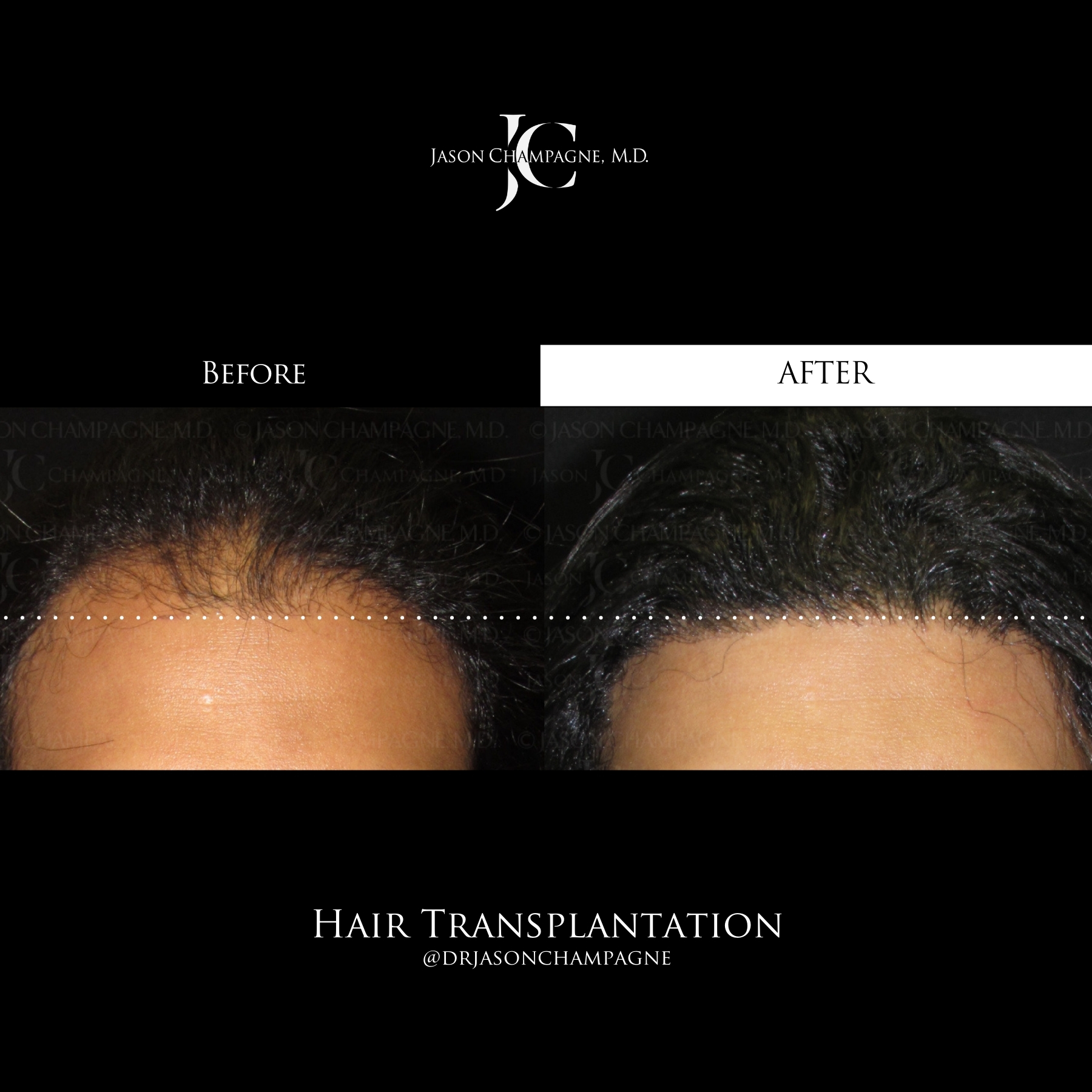
How Hair Transplantation Works
Hair transplantation involves redistributing a patient’s own hair follicles from a donor area, typically the back of the scalp, to areas where density has been lost.
The follicles located in the back of the scalp tend to be genetically resistant to hair loss. When these follicles are relocated, they continue to grow hair in their new location.
In female patients, the procedure is often used to restore:
• Hairline density • Temple recession • Areas of traction hair loss • Eyebrows that have thinned due to over-tweezing or aging. As aesthetic preferences evolve, why more women are choosing brow transplants has become an increasingly common topic of discussion in facial restoration.
Each follicle is placed individually to replicate the natural direction and growth pattern of the hair.
Because the transplanted hair is the patient’s own, the results integrate naturally with existing hair.
Non-Surgical Options: Technologically Advanced Hair Therapy
Not every patient experiencing hair thinning is a candidate for hair transplantation. In many women, hair loss appears as diffuse thinning across the scalp rather than a clearly defined area of recession. In these situations, supporting the health of existing follicles becomes an important part of treatment.
Technologically Advanced Hair Therapy focuses on improving the scalp environment and stimulating hair follicles through modern regenerative technologies. These treatments are designed to support circulation, cellular activity, and follicular health in areas where hair is thinning but still present.
For patients in the earlier stages of hair loss, non-surgical therapies may help strengthen existing hair and improve overall density over time. In other cases, these treatments may be used alongside surgical hair restoration to support long-term follicle health.
Hair loss is rarely a one-size-fits-all condition. Some patients benefit from regenerative therapies alone, while others may combine non-surgical treatments with procedures such as hair transplantation to achieve the most balanced result.
The key is identifying the underlying cause of hair thinning and selecting the treatment approach that best supports long-term hair stability.
The Importance of Subtlety in Female Hair Restoration
One of the most important principles in female hair restoration is subtlety.
The goal is not to create a dramatically new hairline or noticeably change someone’s appearance. Instead, the objective is to restore the natural framing of the face that may have been lost over time.
Hair plays an important role in how the face is perceived. Even small improvements in density along the hairline or temples can create a significant improvement in overall facial balance.
By carefully placing follicles and preserving the natural softness of the hairline, restoration can appear completely natural.
When performed correctly, most people will not notice that a procedure was performed. They will simply see fuller hair and improved facial framing.
Recovery and Hair Growth
Hair transplantation involves a gradual improvement over time.
Following the procedure, transplanted hairs typically enter a resting phase before new growth begins. This is a normal part of the hair growth cycle.
New hair growth generally begins several months after the procedure, with continued improvement over the following year as density develops and the hair matures.
Because the transplanted follicles retain their original genetic characteristics, they typically continue to grow long-term.
Restoring Confidence Without Dramatic Change
Hair restoration for women is rarely about dramatic transformation. Instead, it is about restoring something that was once naturally present.
When density returns to the hairline or temples, patients often find that their overall appearance feels more balanced. Hairstyles become easier to wear, and the face regains a natural frame.
For many women, the improvement is subtle but meaningful.
Hair restoration should always prioritize long-term stability, natural results, and preservation of the individual’s unique features.
When approached thoughtfully, the outcome is not about changing how someone looks. It is about quietly restoring what time, genetics, or styling habits may have altered.
And often, that quiet restoration is what makes the biggest difference.
Schedule Your Consultation
To see Dr. Champagne in consultation:
Office: 310-859-2379
E-mail: info@jasonchampagnemd.com


