
In this feature from the Anti-Aging Hacks podcast with Faraz Khan, Dr. Jason Champagne, a Beverly Hills board-certified facial plastic surgeon, discusses the realities of hair loss, treatment options, and what patients should know about modern hair restoration. From non-surgical therapies to advanced hair transplantation techniques, Dr. Champagne shares expert insights into how men and women can approach hair loss with confidence.
Getting Started in Beverly Hills
Host: How did you get into facial plastic surgery and eventually set up your practice in Beverly Hills?
Dr. Champagne:
I always knew I wanted to be on the West Coast. Beverly Hills is the mecca for plastic surgery, and people come here expecting the best. My training began in head and neck surgery, and from there I specialized in facial plastic surgery. I gravitated toward the cosmetic side, where I could use my creativity to restore a youthful look or subtly enhance normal features.
The competition in Beverly Hills is fierce, but I see that as a good thing. It pushes us all to stay at the top of our game.
Most Requested Procedures
Host: What are the most common procedures people come to you for?
Dr. Champagne:
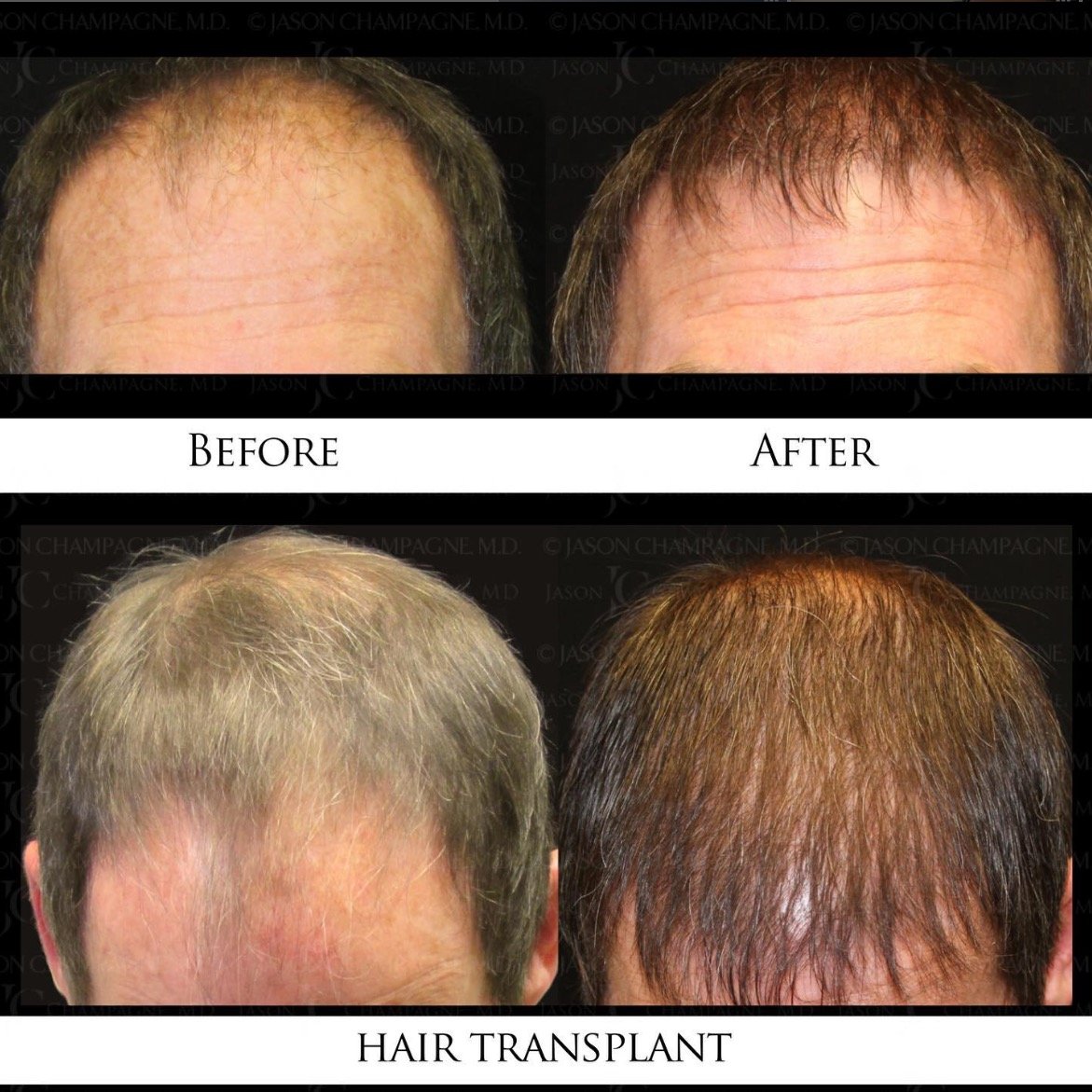
My focus is only on the scalp, face, and neck. Hair restoration is one of my specialties, and I treat both men and women. For men, scalp transplantation is most common. For women, eyebrow transplantation is popular. I also perform beard and mustache restoration.
One of my most requested procedures is eyebrow hair restoration, which I call Champagne Brows®. My second most popular procedure is my customized mandibular implants—jaw angles, chin implants, and full jawline contouring.
Understanding Hair Loss in Men
Host: Let’s talk about scalp hair. Who comes to you for restoration, and what patterns are you seeing?
Dr. Champagne:
Hair loss affects about 50% of men. I see everyone from young men in their late teens to older patients in their 40s and beyond. Younger patients in Beverly Hills tend to act earlier—sometimes as young as 18 or 19—especially if they have a strong family history of baldness.
For these patients, I stress prevention before surgery. The more native hair we can preserve, the better long-term results will be. Hair transplantation relies on donor hair from the back and sides of the scalp. If we don’t slow down future hair loss, donor supply alone isn’t enough to restore density.
Older patients who have lost hair gradually over decades are often easier to treat surgically, since they have a more stable pattern of hair loss.
Why Some Hair Survives
Host: Why does the hair on the back of the head stay, while the hair in the front and crown falls out?
Dr. Champagne:
It comes down to genetics and hormone receptors. Dihydrotestosterone (DHT), a by-product of testosterone, attacks susceptible follicles. The follicles on top of the head have more receptors sensitive to DHT, while the donor area at the back of the head is more resistant.
That’s why transplanted hair from this region tends to last a lifetime. However, some men aren’t good candidates because even their donor area is weak or thinning.
Female Hair Loss
Host: What about women?
Dr. Champagne:
For women, hair loss often accelerates around perimenopause and menopause due to hormonal changes. Treatment is more multifactorial: addressing hormones through primary care or endocrinology, adding laser therapy, supplements, and sometimes topical finasteride when safe.
Exosome therapy is one of the most promising treatments for women and men. It rejuvenates weakened follicles by pushing them back into the growth phase. But if a follicle is completely gone, that’s where transplantation comes in.
Exosomes vs. PRP
Host: How do exosomes compare to PRP?
Dr. Champagne:
I used PRP for many years, but it was hit-or-miss. Exosomes have shown far more consistent results—over 90% of my patients respond. They last longer, often three to four years between treatments, compared to PRP which required frequent sessions.
Exosomes don’t grow new follicles, but they thicken existing ones. Patients with diffuse thinning are ideal candidates.
Surgical Options: FUE vs. FUT
Host: Can you explain the two transplant methods?
Dr. Champagne:
FUE (Follicular Unit Extraction): We punch out individual follicles from the donor area. There’s no linear scar, which is great for patients who shave their heads. But it can reduce donor density, and some follicles are lost during extraction.
FUT (Follicular Unit Transplant/Strip Method): We remove a strip of scalp, dissect follicles under a microscope, and then suture the donor site closed. This method provides a higher yield with less trauma to follicles, but it does leave a linear scar—though hidden if the patient keeps their hair at least a quarter-inch long.
Both methods are effective, but the choice depends on the patient’s lifestyle, goals, and hair characteristics.
Procedure and Recovery
Most procedures take between 5–8 hours, depending on graft count. Local anesthesia and mild sedatives keep patients comfortable. After transplantation, most grafts shed before regrowing around 4 months. Final results take 9–12 months.
Eyebrows and Beards
Beyond the scalp, I also specialize in eyebrow and beard transplants.
Brows: Most women lose eyebrow hair from over-tweezing or waxing. My Champagne Brows® technique refines traditional transplantation to achieve natural growth patterns.
Beards: Ideal for men with patchy facial hair, but careful planning is needed since donor supply is limited.
Final Thoughts
Preventing further loss is just as important as restoration. For young men especially, a comprehensive plan that includes medical therapies, laser, and exosomes is critical. Surgery restores density but does not stop hair loss.
Schedule Your Consultation
To see Dr. Champagne in consultation:
Office: 310-859-2379
E-mail: info@jasonchampagnemd.com


